FQSE
Frontier Quantum Science and Engineering
Frontier from week one.
- Duration
- 36 months
- Weeks
- 156
- Rhythm
- Six days a week
- Language of instruction
- English
The programme
A three-year programme in which quantum science, quantum software, AI and HPC, quantum hardware, materials, cryogenics, control electronics, error correction and research run in parallel from the first week.
Foundations deepen alongside frontier work; they are not a prerequisite year that delays exposure to engineering. Learners meet quantum programming, error correction, hardware and control from week one, while the mathematics and physics underneath them deepen week by week.
How learning moves
Understand → Derive → Visualise → Simulate → Experiment → Engineer → Research → Integrate
Objectives
- 01Build the mathematics, physics and computation needed to work rigorously at the quantum frontier — derived, not memorised.
- 02Engineer quantum software: circuits, compilers, runtimes, verification and testing.
- 03Use classical AI, quantum AI and high-performance computing as working tools, benchmarked against baselines.
- 04Understand quantum hardware end to end: devices, materials, cryogenics, microwave control and real-time electronics.
- 05Design, decode and benchmark quantum error correction toward fault-tolerant operation.
- 06Conduct research: reproduce results, run controlled experiments and defend a technical contribution.
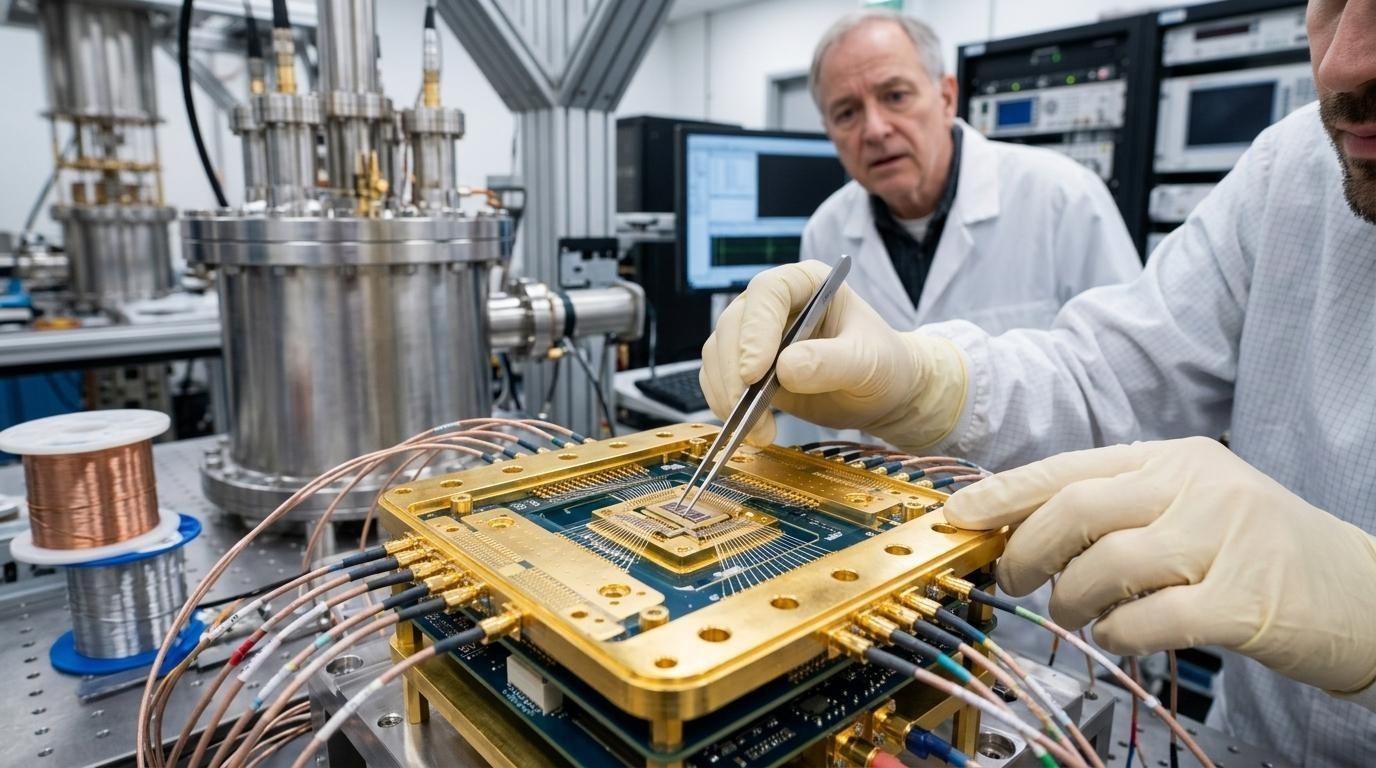
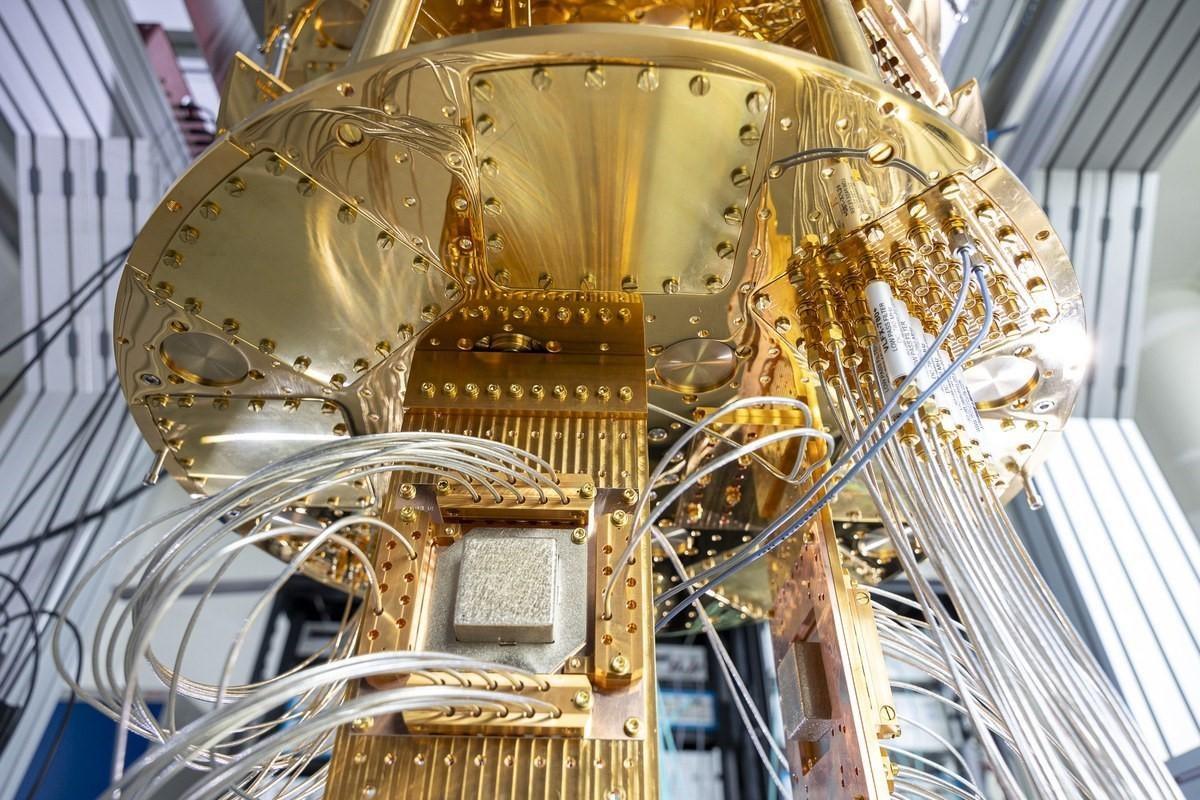
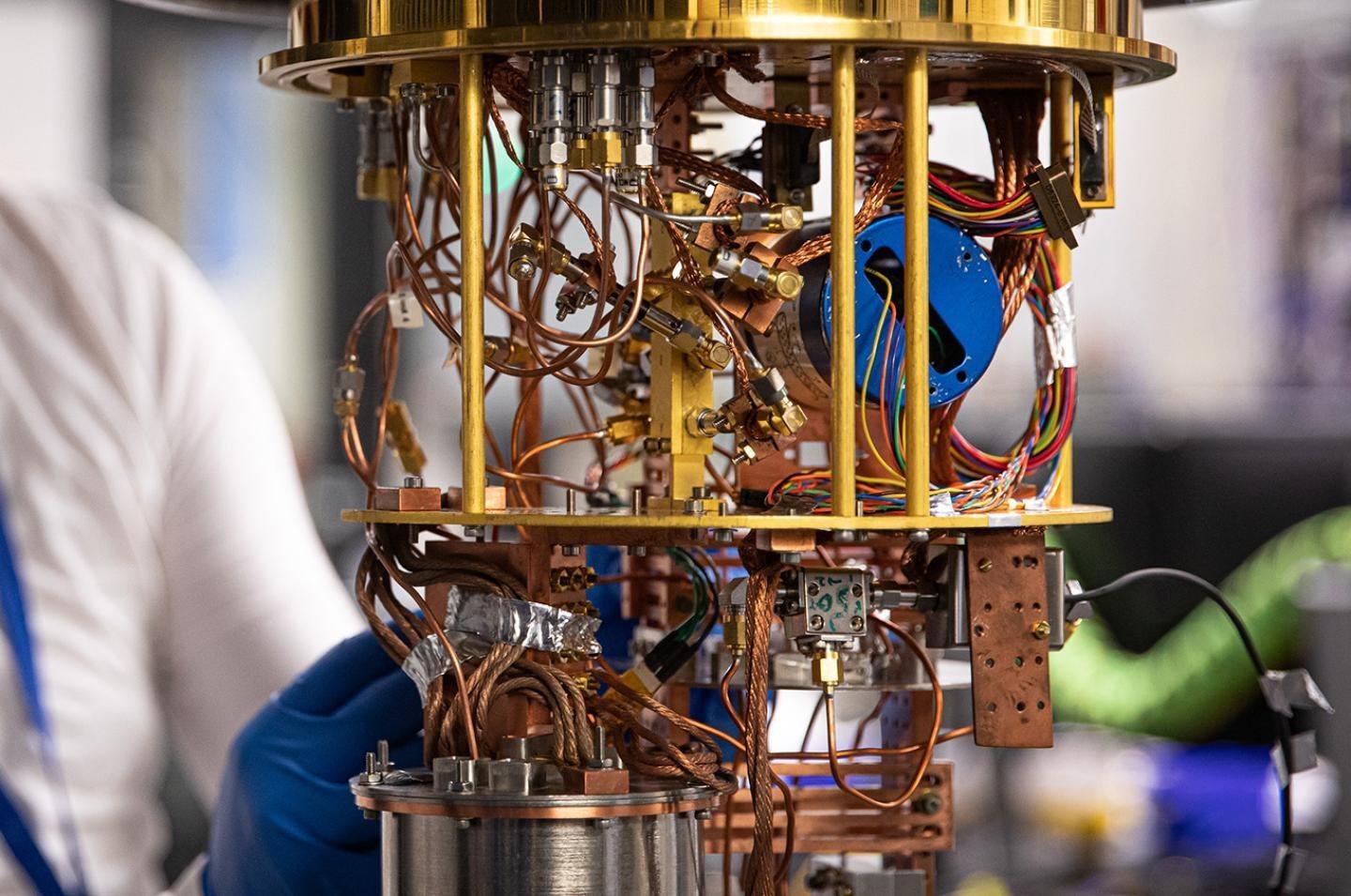
Illustrative images of the field and its equipment; they do not show a TUTOR facility.
What you will study
- 01
Quantum theory
State mathematics, operators, measurement, dynamics, open systems, channels and quantum information.
- 02
Quantum software
Programming, testing, algorithms, compilers and intermediate representations, mapping and routing, runtimes and verification.
- 03
AI and HPC
Classical and quantum machine learning, GPU and distributed computing, tensor networks and hybrid quantum–classical orchestration.
- 04
Hardware and materials
Superconducting, trapped-ion, neutral-atom, photonic and spin-qubit platforms; materials, fabrication, cryogenics and microwave control.
- 05
Error correction
Noise models, stabiliser codes, the surface code, decoders, fault-tolerant operations and logical benchmarking.
- 06
Research and integration
Literature reproduction, experiment design, subsystem integration, technical dossiers and the final research defence.
Curriculum
27 modules · 36 months. Open any module for its topics, practical work, project and assessment.
- Year 1Quantum Science & Engineering Immersion8 modules
- Year 2Advanced Engineering & Specialisation10 modules
- Year 3Research, Integration & Delivery9 modules
Year 1 — Quantum Science & Engineering Immersion
8 modules
Q01Quantum Foundations: States, Operators and Measurement
Year 1, weeks 1–10: Quantum state mathematics; Linear algebra for quantum systems; Qubits and measurement; Quantum gates and circuits; Tensor products and multi-qubit systems; Entanglement and Bell experiments; Schrodinger equation and dynamics; Quantum harmonic oscillator; Spin and angular momentum; Quantum information foundations.
Project Module portfolio contributing to the Year 1 outputs: Quantum programming portfolio; circuit simulator; algorithm implementations; noise/QEC exercise; digital twin; subsystem demonstrator; research log.
Q02Quantum Programming and Algorithms
Year 1, weeks 11–18: Quantum programming foundations; Quantum software testing; Quantum algorithms: Deutsch-Jozsa and Bernstein-Vazirani; Grover search; Quantum Fourier transform; Phase estimation; Shor algorithm architecture; Quantum complexity and verification.
Project Module portfolio contributing to the Year 1 outputs: Quantum programming portfolio; circuit simulator; algorithm implementations; noise/QEC exercise; digital twin; subsystem demonstrator; research log.
Q03Classical and Quantum Machine Learning
Year 1, weeks 19–23: Classical machine learning foundations; Deep learning and optimisation; Quantum machine learning foundations; Variational quantum algorithms; QAOA and hybrid optimisation.
Project Module portfolio contributing to the Year 1 outputs: Quantum programming portfolio; circuit simulator; algorithm implementations; noise/QEC exercise; digital twin; subsystem demonstrator; research log.
Q04High-Performance Computing and Quantum Simulation
Year 1, weeks 24–29: Classical HPC architecture; Parallel computing; GPU scientific computing; Quantum circuit simulation; Density-matrix simulation; Tensor networks and MPS.
Project Module portfolio contributing to the Year 1 outputs: Quantum programming portfolio; circuit simulator; algorithm implementations; noise/QEC exercise; digital twin; subsystem demonstrator; research log.
Q05Noise and Quantum Error Correction Foundations
Year 1, weeks 30–32: Quantum noise models; Quantum error correction introduction; Stabiliser formalism.
Project Module portfolio contributing to the Year 1 outputs: Quantum programming portfolio; circuit simulator; algorithm implementations; noise/QEC exercise; digital twin; subsystem demonstrator; research log.
Q06Quantum Hardware Platforms and Devices
Year 1, weeks 33–42: Quantum processor architectures; Superconducting qubit fundamentals; Materials science for quantum devices; Cryogenic engineering principles; RF and microwave foundations; Quantum control introduction; Quantum optics foundations; Neutral atom and trapped-ion systems; Photonic and semiconductor spin systems; Fabrication and nanotechnology overview.
Project Module portfolio contributing to the Year 1 outputs: Quantum programming portfolio; circuit simulator; algorithm implementations; noise/QEC exercise; digital twin; subsystem demonstrator; research log.
Q07Experimental Methods, Digital Twins and the Software Stack
Year 1, weeks 43–46: Experimental methods and instrumentation; Quantum hardware digital twins; Compiler and circuit optimisation introduction; Quantum runtime and cloud execution.
Project Module portfolio contributing to the Year 1 outputs: Quantum programming portfolio; circuit simulator; algorithm implementations; noise/QEC exercise; digital twin; subsystem demonstrator; research log.
Q08Research Methods and Year-One Integration
Year 1, weeks 47–52: Research methods and literature reproduction; MILLION-Q architecture studio I; MILLION-Q subsystem studio I; Cross-domain integration sprint; Year-one engineering demonstrator; Year-one research defence.
Project Module portfolio contributing to the Year 1 outputs: Quantum programming portfolio; circuit simulator; algorithm implementations; noise/QEC exercise; digital twin; subsystem demonstrator; research log.
Year 2 — Advanced Engineering & Specialisation
10 modules
Q09Advanced Quantum Theory and Information
Year 2, weeks 1–5: Advanced quantum mechanics: operators and symmetries; Open quantum systems; Quantum channels and tomography; Quantum statistical mechanics; Advanced quantum information.
Project Module portfolio contributing to the Year 2 outputs: Specialisation portfolio; compiler/runtime or device/control prototype; advanced QEC decoder; experimental or HPC benchmark; interface-controlled subsystem.
Q10Advanced Quantum Algorithms and Simulation
Year 2, weeks 6–10: Quantum algorithms and Hamiltonian simulation; Advanced phase estimation and quantum walks; Quantum optimisation research; Quantum chemistry and materials simulation; Quantum algorithms verification.
Project Module portfolio contributing to the Year 2 outputs: Specialisation portfolio; compiler/runtime or device/control prototype; advanced QEC decoder; experimental or HPC benchmark; interface-controlled subsystem.
Q11Quantum Compilers, Runtimes and Verification
Year 2, weeks 11–18: Quantum programming languages and IR; Quantum compiler architecture; Gate synthesis and decomposition; Qubit mapping and routing; Noise-aware compilation; Quantum runtime systems; Quantum cloud and distributed execution; Quantum software verification.
Project Module portfolio contributing to the Year 2 outputs: Specialisation portfolio; compiler/runtime or device/control prototype; advanced QEC decoder; experimental or HPC benchmark; interface-controlled subsystem.
Q12Artificial Intelligence for Quantum Systems
Year 2, weeks 19–22: Classical AI for quantum control; Advanced quantum machine learning; AI-assisted materials and device discovery; Learning-assisted QEC decoding.
Project Module portfolio contributing to the Year 2 outputs: Specialisation portfolio; compiler/runtime or device/control prototype; advanced QEC decoder; experimental or HPC benchmark; interface-controlled subsystem.
Q13Distributed HPC and Hybrid Orchestration
Year 2, weeks 23–28: HPC architecture and cluster engineering; MPI and distributed scientific computing; GPU kernel engineering; Distributed quantum simulation; Tensor network algorithms; Hybrid quantum-classical orchestration.
Project Module portfolio contributing to the Year 2 outputs: Specialisation portfolio; compiler/runtime or device/control prototype; advanced QEC decoder; experimental or HPC benchmark; interface-controlled subsystem.
Q14Superconducting Devices, Materials and Fabrication
Year 2, weeks 29–32: Superconducting device physics; Josephson junction fabrication and interfaces; Quantum materials characterisation; Nanofabrication process engineering.
Project Module portfolio contributing to the Year 2 outputs: Specialisation portfolio; compiler/runtime or device/control prototype; advanced QEC decoder; experimental or HPC benchmark; interface-controlled subsystem.
Q15Cryogenic, Microwave and Real-Time Control Engineering
Year 2, weeks 33–36: Cryogenic system design; Cryogenic microwave engineering; Microwave electronics and signal chains; FPGA and real-time control.
Project Module portfolio contributing to the Year 2 outputs: Specialisation portfolio; compiler/runtime or device/control prototype; advanced QEC decoder; experimental or HPC benchmark; interface-controlled subsystem.
Q16Platform Engineering: Photons, Atoms, Ions and Spins
Year 2, weeks 37–41: Quantum optics and laser systems; Neutral-atom engineering; Trapped-ion engineering; Photonic quantum engineering; Semiconductor spin-qubit engineering.
Project Module portfolio contributing to the Year 2 outputs: Specialisation portfolio; compiler/runtime or device/control prototype; advanced QEC decoder; experimental or HPC benchmark; interface-controlled subsystem.
Q17Fault-Tolerant Quantum Error Correction
Year 2, weeks 42–45: QEC stabiliser codes; Surface-code implementation; Decoder algorithms; Fault-tolerant operations.
Project Module portfolio contributing to the Year 2 outputs: Specialisation portfolio; compiler/runtime or device/control prototype; advanced QEC decoder; experimental or HPC benchmark; interface-controlled subsystem.
Q18Benchmarking, Co-Design and Year-Two Review
Year 2, weeks 46–52: Quantum benchmarking and metrology; Experimental design and measurement; MILLION-Q architecture studio II; MILLION-Q subsystem engineering II; Hardware-software co-design; Integration and reliability sprint; Year-two engineering review.
Project Module portfolio contributing to the Year 2 outputs: Specialisation portfolio; compiler/runtime or device/control prototype; advanced QEC decoder; experimental or HPC benchmark; interface-controlled subsystem.
Year 3 — Research, Integration & Delivery
9 modules
Q19Specialisation Research and Advanced Methods
Year 3, weeks 1–3: Specialisation research plan; Advanced theory for selected platform; Advanced numerical methods.
Project Module portfolio contributing to the Year 3 outputs: Validated subsystem; integrated test evidence; research thesis/technical dossier; independent replication package; system scaling and risk assessment.
Q20Quantum Software, Compiler and Runtime Capstones
Year 3, weeks 4–7: Quantum software architecture capstone; Compiler optimisation research; Quantum runtime and control integration; Distributed quantum computing.
Project Module portfolio contributing to the Year 3 outputs: Validated subsystem; integrated test evidence; research thesis/technical dossier; independent replication package; system scaling and risk assessment.
Q21Quantum AI, HPC and Algorithm Research
Year 3, weeks 8–12: Quantum AI research; AI for calibration and diagnostics; Quantum HPC scaling study; Quantum algorithm research; Quantum chemistry/materials capstone.
Project Module portfolio contributing to the Year 3 outputs: Validated subsystem; integrated test evidence; research thesis/technical dossier; independent replication package; system scaling and risk assessment.
Q22Advanced Fault Tolerance and Logical Benchmarking
Year 3, weeks 13–18: Advanced QEC code families; Repeated syndrome extraction; Real-time decoding engineering; Fault-tolerant architecture; Correlated noise and leakage; Logical benchmarking.
Project Module portfolio contributing to the Year 3 outputs: Validated subsystem; integrated test evidence; research thesis/technical dossier; independent replication package; system scaling and risk assessment.
Q23Hardware Platform Integration Capstones
Year 3, weeks 19–26: Superconducting processor engineering; Materials and fabrication research; Cryogenic integration capstone; RF and microwave control capstone; Neutral atom system integration; Trapped-ion system integration; Photonic system integration; Spin-qubit system integration.
Project Module portfolio contributing to the Year 3 outputs: Validated subsystem; integrated test evidence; research thesis/technical dossier; independent replication package; system scaling and risk assessment.
Q24Sensing, Networking and Systems Engineering
Year 3, weeks 27–31: Quantum sensing and metrology; Quantum networking and modularity; System reliability engineering; Manufacturing and scale-up engineering; Digital twin and systems verification.
Project Module portfolio contributing to the Year 3 outputs: Validated subsystem; integrated test evidence; research thesis/technical dossier; independent replication package; system scaling and risk assessment.
Q25System Integration, Validation and Scaling
Year 3, weeks 32–38: MILLION-Q system architecture freeze; Subsystem integration sprint I; Subsystem integration sprint II; System validation and benchmarking; Logical-qubit performance study; Physical-qubit and logical-qubit accounting; Scaling and resource modelling.
Project Module portfolio contributing to the Year 3 outputs: Validated subsystem; integrated test evidence; research thesis/technical dossier; independent replication package; system scaling and risk assessment.
Q26Governance, Technology Transfer and Dissemination
Year 3, weeks 39–42: Security, safety and research governance; Technology transfer and IP strategy; Research paper and technical dossier; Independent replication and audit.
Project Module portfolio contributing to the Year 3 outputs: Validated subsystem; integrated test evidence; research thesis/technical dossier; independent replication package; system scaling and risk assessment.
Q27Final Demonstration, Defence and Transition
Year 3, weeks 43–52: Engineering demonstration rehearsal; Final subsystem demonstration; Final system integration review; Thesis and research defence; MILLION-Q roadmap contribution; Portfolio and professional review; Final research symposium; Programme completion and next-stage plan; Post-programme research transition; Final competency and portfolio audit.
Project Module portfolio contributing to the Year 3 outputs: Validated subsystem; integrated test evidence; research thesis/technical dossier; independent replication package; system scaling and risk assessment.
Projects & practical work
- 01Every week: a derivation and problem set, a tested code module, a benchmark report, an engineering design note, a simulation or lab notebook, and a research log.
- 02Simulation, remote quantum-hardware experiments and supervised practicals, with every result labelled as ideal simulation, noisy simulation, remote-hardware execution or physical observation.
- 03Year 1 — quantum programming portfolio, circuit simulator, algorithm implementations, a noise/QEC exercise, a digital twin and a subsystem demonstrator.
- 04Year 2 — a specialisation portfolio, a compiler/runtime or device/control prototype, an advanced QEC decoder and an interface-controlled subsystem.
- 05Year 3 — a validated subsystem with integrated test evidence, a research thesis or technical dossier and an independent replication package.
Outcomes
- 01A reproducible technical portfolio spanning theory, software, hardware and research.
- 02An independently reviewed contribution to a research or engineering subsystem.
- 03The ability to report results honestly: physical, usable, encoded and logical qubits separately; logical error rates, code distance and uncertainty — never "error-free".
Assessment
Weekly review of the research log, code repository, simulation notebook, experiment records, design artefact and an oral explanation — rewarding correctness, reproducibility, engineering judgement and collaboration, not hours logged.
A multidisciplinary milestone review every six weeks. Learners who need prerequisite support receive a remediation plan without being removed from frontier work.
Completion requires a reproducible technical portfolio, a passed final research defence and an independently reviewed subsystem contribution.
Fees
Applying: the application fee of US$100 and the Understanding Your Potential Assessment fee of US$300 — separate fees, payable in US dollars or rupees — and evidence of English (a result you hold, reviewed at no charge, or the TUTOR English Proficiency Test, US$100). None of them is tuition or guarantees admission.
INRProgramme fee
| Format | Fee | Approx. USD |
|---|---|---|
| Batch | ₹27,00,000 | US$28,874 |
| Premium | ₹54,00,000 | US$57,748 |
| One-to-One | ₹1,50,00,000 | US$160,411 |
USD amounts use the current reference rate of ₹93.51 per US$1.
Questions
What is Frontier Quantum Science and Engineering (FQSE)?
A TUTOR programme taught in English over 36 months. A three-year programme in which quantum science, quantum software, AI and HPC, quantum hardware, materials, cryogenics, control electronics, error correction and research run in parallel from the first week.
How long does FQSE take?
FQSE takes 36 months: 156 weeks, six days a week.
What does the FQSE curriculum cover?
27 modules in 3 stages: Year 1 — Quantum Science & Engineering Immersion (8); Year 2 — Advanced Engineering & Specialisation (10); Year 3 — Research, Integration & Delivery (9). Each module page lists its topics, practical work, project and assessment.
How is FQSE taught?
Learning moves through Understand, Derive, Visualise, Simulate, Experiment, Engineer, Research, Integrate. Every week: a derivation and problem set, a tested code module, a benchmark report, an engineering design note, a simulation or lab notebook, and a research log.
How is FQSE assessed?
Weekly review of the research log, code repository, simulation notebook, experiment records, design artefact and an oral explanation — rewarding correctness, reproducibility, engineering judgement and collaboration, not hours logged. A multidisciplinary milestone review every six weeks. Learners who need prerequisite support receive a remediation plan without being removed from frontier work. Completion requires a reproducible technical portfolio, a passed final research defence and an independently reviewed subsystem contribution.
What will I be able to do after FQSE?
A reproducible technical portfolio spanning theory, software, hardware and research. An independently reviewed contribution to a research or engineering subsystem. The ability to report results honestly: physical, usable, encoded and logical qubits separately; logical error rates, code distance and uncertainty — never "error-free".
Does FQSE include research?
Yes. Conduct research: reproduce results, run controlled experiments and defend a technical contribution. Year 3 — a validated subsystem with integrated test evidence, a research thesis or technical dossier and an independent replication package.
Which learning formats does FQSE offer?
3 formats: Batch — learn with your cohort: live lectures, labs and projects on a shared schedule; Premium — your cohort, plus extra mentoring, faculty and teaching-assistant access, and detailed reviews of your work; One-to-One — your cohort, plus individual teaching and a personal learning plan, arranged one to one.
How much does FQSE cost?
Programme fee: Batch ₹27,00,000 (about US$28,874); Premium ₹54,00,000 (about US$57,748); One-to-One ₹1,50,00,000 (about US$160,411). Applying is separate: the application fee is US$100 and the Understanding Your Potential Assessment is US$300. Neither is tuition or guarantees admission, and you can ask for a waiver.
Who can apply to FQSE?
Capable beginners are welcome, and every application is read in full. Admissions looks for academic preparation and potential, intellectual curiosity, reasoning, character and commitment to the programme.
How do I apply to FQSE?
Start an application and pay the application fee (or ask for a waiver); complete the form, essays and documents and ask one academic referee; take the Understanding Your Potential Assessment and show your English. Some applicants are invited to a short online interview, and a committee decides.
Is FQSE taught in English?
Yes. Show your English with an IELTS, TOEFL, Cambridge, Duolingo or PTE result, reviewed at no charge, or take the TUTOR English Proficiency Test (US$100).